花崗岩大理石用ローラー細線鋸
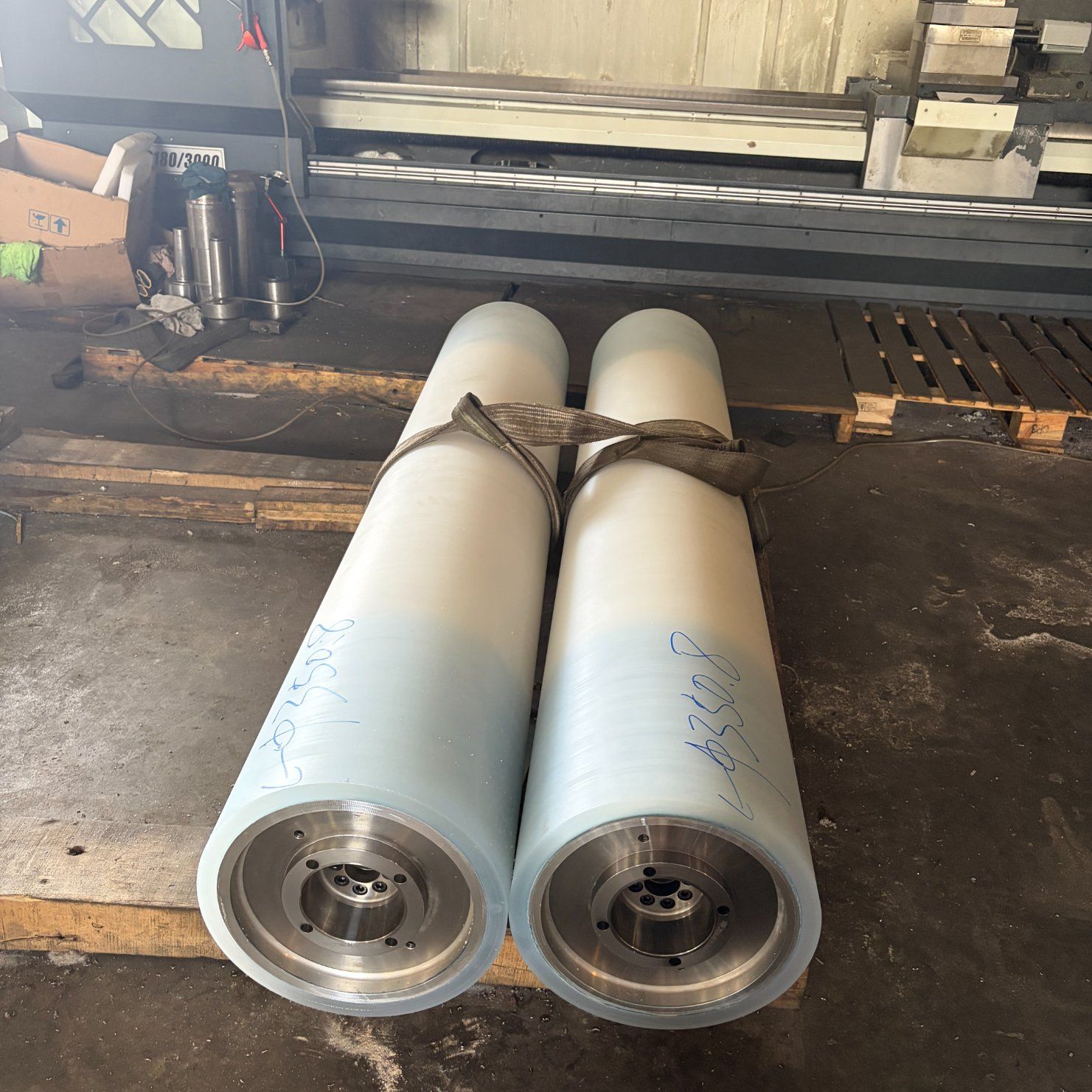
Roller for Stone Thin Multi-wire Saw machine
Working Principle of Line Saw Roller
The line saw roller is a core component in a wire saw system, responsible for guiding and driving the diamond wire to perform high-speed reciprocating motion. During operation, the motor drives the diamond wire to circulate rapidly (up to tens of thousands of cycles per minute) between two or more rollers. The surface of the roller features precision-machined grooves that securely guide the wire, preventing deviation or vibration during cutting.
These evenly spaced grooves ensure uniform force distribution across the workpiece, enabling stable, high-precision multi-blade cutting of hard materials such as marble and granite .
Modern rollers are typically constructed with a lightweight aluminum alloy core, reducing weight from ~300 kg to ~200 kg, which lowers rotational inertia, saves energy, and improves system stability .
The outer layer is coated with a high-wear-resistant polyurethane rubber imported from abroad. The coating thickness is precisely controlled-too thick may cause the wire to sink into the rubber ("rubber biting"), while too thin may lead to insufficient support and wire breakage .
Advanced structural designs, such as the "five-petal rib structure" , enhance internal support and overall rigidity, improving durability and cutting performance .
Some advanced models also incorporate adjustable roller spacing and automatic tension control systems, allowing adaptation to different material sizes and ensuring consistent cutting quality.
Installation and Maintenance of Line Saw Roller
Proper installation and maintenance of the line saw roller are critical to ensuring efficient and stable operation of cutting equipment, directly affecting diamond wire lifespan, cutting precision, and downtime costs. Correct procedures can significantly reduce issues such as wire misalignment, breakage, and abnormal wear.
I. Installation Procedure
- Inspection and Preparation
- Confirm that the roller model matches the equipment; check for any deformation of the aluminum core or damage to the polyurethane coating.
- Clean the shaft mounting area, removing oil, debris, and burrs to ensure a smooth fit.
- Alignment and Assembly
- Slowly slide the roller into the spindle position along the guide rail, ensuring consistent groove orientation to prevent diamond wire tangling.
- Use dedicated tooling for alignment to avoid eccentricity or tilting, which could affect dynamic balance.
- Securing and Locking
- Evenly tighten the flange bolts on both ends using a diagonal tightening method with incremental torque to prevent deformation from uneven pressure.
- After installation, manually rotate the roller to verify smooth, unobstructed movement.
- Initial Tension Adjustment
- Once the diamond wire is installed, use the tensioning pulley to set initial tension (typically 80-120N, depending on wire diameter), then perform a no-load test run.
II. Routine Maintenance
- Regular Cleaning: After each shift, wipe the roller surface with a soft cloth to remove resin buildup, dust, and coolant residue, preventing groove clogging that affects guidance accuracy .
- Wear Monitoring:
- Check groove depth; replace the roller if wear exceeds 0.3mm;
- Inspect the polyurethane layer for cracks, peeling, or "sagging" to avoid damaging the diamond wire .
- Operational Checks:
- Listen: for unusual vibrations or noises (e.g., "clicking" may indicate loose bearings);
- Observe: whether the diamond wire frequently deviates or jumps;
- Measure: periodically check radial runout, which should be ≤0.15mm.
- Lubrication:
- Non-contact bearings do not require frequent greasing, but seal integrity should be checked every three months;
- If gear-driven, apply high-temperature grease to prevent dry friction.
III. Troubleshooting Common Issues
SymptomPossible CauseSolutionFrequent diamond wire breakageBurrs on roller grooves or hardened rubber surfacePolish or replace the rollerUneven cut surfaceExcessive roller runout or uneven tensionRebalance the roller, inspect tensioning systemIncreased equipment noiseBearing wear or loose installationDisassemble and replace bearings, tighten connections

Tip: It is recommended to establish a roller usage log, recording installation time, cumulative operating hours, and reason for replacement, to analyze wear patterns and optimize spare part management .
Other Information:
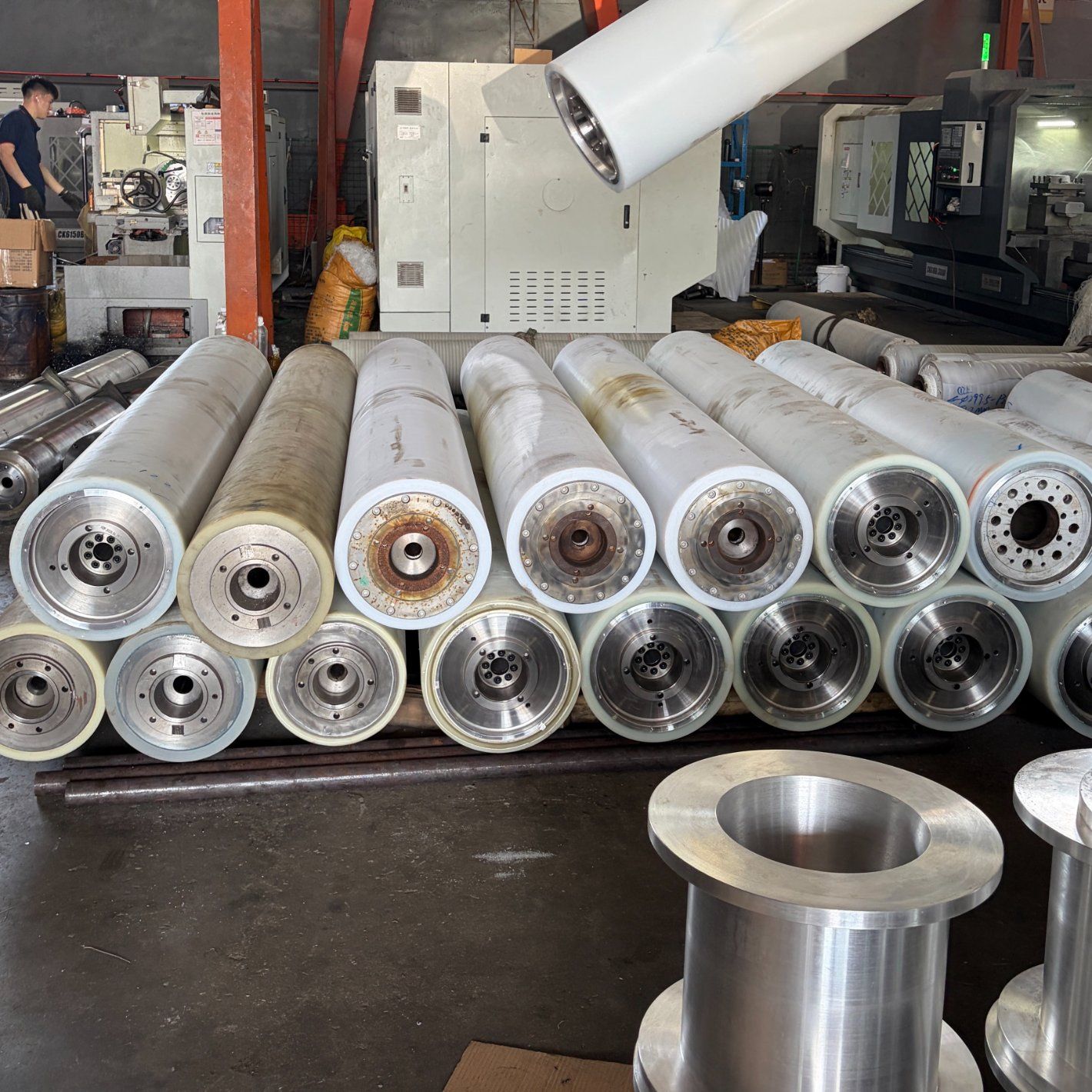
- Each machine is equipped with a set of 4 rollers.
- Roller dimensions differ across various machine brands.
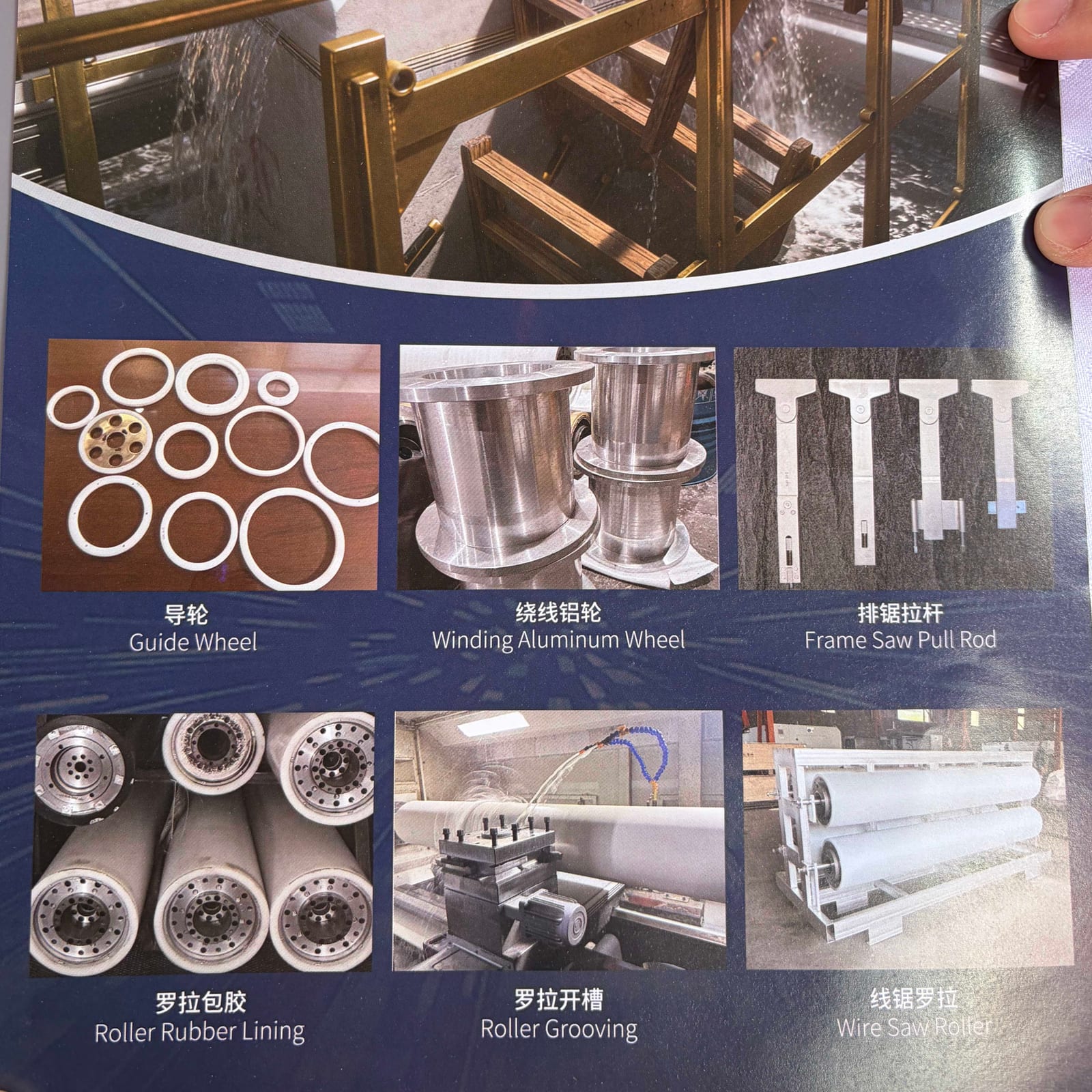
- All rollers are custom-made. Please provide the following information for customization: a. Machine brand b. Roller length c. Roller diameter (If available, kindly send photos of the roller for identification)
- The groove specifications of rollers vary depending on the thickness of stone slabs and the diameter of ultra-fine wires.
- Roller Material: Polyurethane elastomer (PU) delivers the best performance. Under normal working conditions, it needs replacement every 1.5 months. Standard-grade rollers require replacement every 20 to 25 days.
カテゴリー: Wire saw